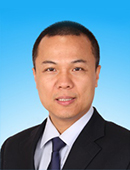
Ting CHEN
Professor
Department of Computer Science and Technology
Email: tingchen AT tsinghua dot edu dot cn
URL:http://timlab.cn
Phone:+86-10-62797101
Education background
• Ph.D. (1997), Computer Science Department, SUNY at Stony Brook.
• B.E. (1993), Department of Computer Science and Technology, Tsinghua University, Beijing.
Work Experience
• Lecturer of Genetics, Harvard Medical School,1997-2000
• Professor of Computational Biology and Computer Science, University of Southern California, 2000-2016
• Professor of Computer Science, Tsinghua University, Current
Areas of Research Interests/ Research Projects
• AI in Health Care
• Computational Biology
• Algorithm Analysis
Research Status
His research interests are focused on AI in healthcare, computational biology/bioinformatics, and algorithms. His current research topics include (1) disease diagnosis, treatment, and prevention, (2) rare diseases, and (3) analysis of the human genome and microbiome. He has published over 180 papers in top journals, including Science, Cell, Nature Biomedical Engineering, Nature Communications, npj Digital Medicine, Nucleic Acids Research, PLoS Medicine, and PNAS, and in top computer science conferences, including CVPR, ICLR, AAAI, IJCAI, KDD, WWW, RECOME, and ISMB. His
publications have been cited 15,000 times (Google Scholar). He is among the World’s Top 2% most cited scientists.
He was the department head of computational biology at USC from 2015 to 2016. He has served as the chief scientist at China's National Center for Health and Medical Big Data (Fuzhou) from 2017 to 2020 and as the Director of the Center for Big Data Research in Health and Medicine at the Institute of Data Science, Tsinghua University, Beijing, China, since 2016.
He received the Sloan Research Fellowship in 2004 and has supervised over 60 postdoctoral fellows, doctoral, and master's students.
Publications (last 5 years)
1. Chen X, Qiao Z*, Chen G, Su L, Zhang Z, Wang X, Xie P, Huang F, Zhou J, Jiang Y*, Chen T* (2026) Expanding the Capability Frontier of LLM Agents with ZPD-Guided Data Synthesis. International Conference on Learning Representations (ICLR 2026).
2. Zhang P, Han R, Kong X, Chen T*, and Ma J* (2026) SpecLig: Energy-Guided Hierarchical Model for Target-Specific 3D Ligand Design. Research in Computational Molecular Biology (RECOMB 2026).
3. Chen X, Ye J, Mao X, Wang L, Zhang S, Chen T* (2026) RAREAGENTS: Autonomous Multi-disciplinary Team for Rare Disease Diagnosis and Treatment. Association for the Advancement of Artificial Intelligence (AAAI 2026 Oral, top 4%)
4. Zhu, C., Wu, L., Ning, D. et al. (2025) Global diversity and distribution of antibiotic resistance genes in human wastewater treatment systems. Nature Communications 16, 4006 (2025). doi.org/10.1038/s41467-025-59019-3
5. Zhang P, Ma J*, and Chen T* (2025) Escaping the drug-bias trap: using debiasing design to improve interpretability and generalization of drug-target interaction prediction. IEEE/ACM Transactions on Computational Biology and Bioinformatics. vol. 22, no. 4, pp. 1902-1911, July-Aug. 2025, doi: 10.1109/TCBBIO.2025.3576488.
6. Lv D, Guo Q, Lan B, Yi Z, Qiang H, Guan Y, Peng X, Chen T*, Ma F* (2025) Exploration of the clonal evolution and construction of the tumor clonal evolution rate as a prognostic indicator in metastatic breast cancer. BMC Medicine. 2025 Feb 25,23(1):122. doi: 10.1186/s12916-025-03959-6.
7. Luo L, Tang B, Chen X, Han R, Chen T* (2025) VividMed: Vision Language Model with Versatile Visual Grounding for Medicine. North American Chapter of the Association for Computational Linguistics (NAACL 2025).
8. Zhang P, Peng X, Han R, Chen T*, and Ma J* (2025) Rag2Mol: Structure-based drug design based on Retrieval Augmented Generation. (RECOMB 2025) Briefings in Bioinformatics. Volume 26, Issue 3, May 2025, bbaf265, https://doi.org/10.1093/bib/bbaf265.
9. Han R, Liu X, Pan T, Xu J, Wang X, Lan W, Li Z, Wang Z, Song J, Wang G, Chen T* (2025) CoPRA: Bridging Cross-domain Pretrained Sequence Models with Complex Structures for Protein-RNA Binding Affinity Prediction. Association for the Advancement of Artificial Intelligence (AAAI 2025 Oral, top 4%)
10. Han R, Huang W, Luo L, Han X, Shen J, Zhang Z, Zhou J, Chen T* (2025) HeMeNet: Heterogeneous Multichannel Equivariant Network for Protein Multi-task Learning. Association for the Advancement of Artificial Intelligence (AAAI 2025).
11. Mao X, Huang Y, Jin Y, Wang L, et al., Zhang S* and Chen T* (2025) PhenoBrain: A Phenotype-Based AI Differential Diagnosis Pipeline Outperforms Human Experts in Diagnosing Rare Diseases Using EHRs. npj Digital Medicine. (2025) 8:68.
12. Zheng S, Gu Y, Gu Y, Zhao Y, Li L, Wang M, Jiang R, Yu X, Chen T* and Li J* (2025) Machine learning–enabled virtual screening indicates the anti-tuberculosis activity of aldoxorubicin and quarfloxin with verification by molecular docking, molecular dynamics simulations, and biological evaluations. Briefings in Bioinformatics, Volume 26, Issue 1, January 2025, bbae696, https://doi.org/10.1093/bib/bbae696
13. Li J, Gao Y, Shu G, Chen X, Zhu J, Zheng S, Chen T* (2024) HMicroDB: A Comprehensive Database of Herpetofaunal Microbiota with a Focus on Host Phylogeny, Physiological Traits, and Environment Factors. Molecular Ecology Resources. 15 November 2024 https://doi.org/10.1111/1755-0998.14046
14. Zou X, He W, Huang Y, et al, Chen T* (2024) AI-Driven Diagnostic Assistant: A Reinforcement Learning Approach to Medical Inquiry. J Med Internet Res. 2024,26:e54616, doi:10.2196/54616
15. Chen X, Mao X, Guo Q, Zhang S, Chen T* (2024) Rare Bench: Can LLM Serve as Rare Diseases Specialists? ACM Knowledge discovery in databases (KDD), 2024.
16. Chen W, Huang S, Chiang Y, Pearce T, Tu W, Chen T*, Zhu J* (2024) DGPO: Discovering Multiple Strategies with Diversity-Guided Policy Optimization. The 38th Annual AAAI Conference on Artificial Intelligence (AAAI), 2024.
17. Zhao L, Lin L, Teng W, Chen M, Zeng Y, Zheng L, Brand J, Chen T, Han B, Song L, Shu W, Gan N, Gong Y, and Li X (2023) The facilitating role of phycospheric heterotrophic bacteria in cyanobacterial phosphonate availability and Microcystis bloom maintenance. Microbiome. 11, 142 (2023). https://doi.org/10.1186/s40168-023-01582-2
18. Zhang X and Chen T* (2023) DeSTSeg: Segmentation Guided Denoising Student-Teacher for Anomaly Detection. IEEE / CVF Computer Vision and Pattern Recognition Conference (CVPR), 2023.
19. Xu Y#, Zheng B#, Liu X, Wu T, Ju J, Wang S, Lian Y, Zhang H, Liang T, Sang Y, Jiang R, Wang G*, Ren J* and Chen T* (2023) Improving artificial intelligence pipeline
for liver malignancy diagnosis using ultrasound images and video frames. Briefings in Bioinformatics. 2023, 24(1), 1–13. doi.org/10.1093/bib/bbac569.
20. Li W, Hu W, Chen T, Chen N, Feng C (2022) StackVAE-G: An efficient and interpretable model for time series anomaly detection. AI Open Volume 3, 2022, Pages 101-110.
21. Zhang X, Wu H, Chen T*, and Wang G* (2022) Automatic Diagnosis of Arrhythmia with Electrocardiogram Using Multiple Instance Learning: from Rhythm Annotation to Heartbeat Prediction. Artificial Intelligence In Medicine. 2022 Oct:132:102379. doi: 10.1016/j.artmed.2022.102379. Epub 2022 Aug 22.
22. He W and Chen T* (2022) Scalable Online Disease Diagnosis via Multi-Model-Fused Actor-Critic Reinforcement Learning. Proceeding of SIGKDD Conference on Knowledge Discovery and Data Mining (KDD2022).
23. He W, Mao X, Ma C, Huang Y, Hernandez-Lobato J, and Chen T*(2022) BSODA: A Bipartite Scalable Framework for Online Disease Diagnosis. ACM Web Conference (WWW2022).
24. Xu Y, Liu X, Pan L, Mao X, Liang H*, Wang G*, Chen T* (2021) Explainable Dynamic Multimodal Variational Autoencoder for the Prediction of Patients with Suspected Central Precocious Puberty. IEEE Journal of Biomedical and Health Informatics (JBHI). 2021 Aug 13,PP. http://doi.org/10.1109/JBHI.2021.3103271
25. Zhang K*, Liu X, Xu J, Yuan J, Cai W, Chen T*, et al., Xu T*, Zhou Y*, Wang G* (2021) Deep learning models for the detection and incidence prediction of chronic kidney disease and type-2 diabetes from retinal fundus images. Nature Biomedical Engineering. 2021 Jun, 5(6): 533-545. https://doi.org/10.1038/s41551-021-00745-6.
26. Zhu C, Zhang J, Wang X, Yang Y, Chen N, Lu Z, Ge Q, Jiang R, Zhang X, Yang Y, and Chen T* (2021) Responses of cyanobacterial aggregate microbial communities to algal blooms. Water Research. 2021, 196: 117014. https://doi.org/10.1016/j.watres.2021.117014.
27. Wang G*, Liu X, Shen J, Li Z, Ye L, Wang C, Wu X, Chen T*, et al., Li W*, Zhang K*, Lin T* (2021) A deep-learning pipeline for the diagnosis and discrimination of viral, non-viral and COVID-19 pneumonia from chest X-ray images. Nature Biomedical Engineering. 2021 Jun, 5(6): 509-521. http://doi.org/10.1038/s41551-021-00704-1.
28. Yang Y, Wang X, Zhu C, Chen N and Chen T* (2021) kLDM: Inferring Multiple Metagenomic Association Networks based on the Variation of Environmental Factors. Genomics, Proteomics & Bioinformatics. 2021 Feb 16, S1672-0229 (21) 00020-6. https://doi.org/10.1016/j.gpb.2020.06.015.
29. Xie K, Liu Z, Chen N and Chen T* (2021) redPATH: Reconstructing the Pseudo Development Time of Cell Lineages in Single-Cell RNA-Seq Data and
Applications in Cancer Genomics. Genomics, Proteomics & Bioinformatics. 2021 Feb 17, S1672-0229 (21) 00019-X. https://doi.org/10.1016/j.gpb.2020.06.014.
30. Gu J, Shi Y, Zhu Y, Chen N, Wang H, Zhang Z*, and Chen T*(2020) Ambient air pollution and cause-specific risk of hospital admission in China: A nationwide time-series study. PLoS Medicine 17(8): e1003188. https://doi.org/10.1371/journal.pmed.1003188.
31. Zhang K, Liu X, Shen J, et al. (2020) Clinically Applicable AI System for Accurate Diagnosis, Quantitative Measurements and Prognosis of COVID-19 Pneumonia Using Computed Tomography. Cell. http://doi.org/10.1016/j.cell.2020.04.045
32. Liu X, Wang K, Zhang K, Chen T, and Wang G* (2020) KISEG: A Three-Stage Segmentation Framework for Multi-level Acceleration of Chest CT Scans from COVID-19 Patients. Medical image computing and computer assisted intervention (MICCAI 2020).
33. Wang K, Liu X, Zhang K, Chen T, and Wang G* (2020). Anterior Segment Eye Lesion Segmentation with Advanced Fusion Strategies and Auxiliary Tasks. Medical image computing and computer assisted intervention (MICCAI 2020).
34. Wang K, Chen X, Chen N and Chen T* (2020) Automatic Emergency Diagnosis with Knowledge-Based Tree Decoding. International Joint Conferences on Artificial Intelligence (IJCAI 2020).
35. Huang S, Su H, Zhu J* and Chen T* (2020) SVQN: Sequential Variational Soft Q-Learning Networks. The International Conference on Learning Representations (ICLR 2020).
36. Wang K, Chen N and Chen T* (2020) Joint Medical Ontology Representation Learning for Healthcare Predictions. The International Joint Conference on Neural Networks (IJCNN 2020).
37. Gu J, Shi Y, Chen N, Wang H* and Chen T* (2020) Ambient fine particulate matter and hospital admissions for ischemic and hemorrhagic strokes and transient ischemic attack in 248 Chinese cities. Science of the Total Environment. https://doi.org/10.1016/j.scitotenv.2020.136896.
38. Xie K, Huang Y, Zeng F, Liu Z, Chen T*. (2020) scAIDE: Clustering of large-scale single-cell RNA-seq data reveals putative and rare cell types. NAR Genomics and Bioinformatics. Volume 2, Issue 4, December 2020. https://doi.org/10.1093/nargab/lqaa082
39. Gu J, Shi Y, Zhu Y, Chen N, Wang H, Zhang Z*, and Chen T*(2020) Ambient air pollution and cause-specific risk of hospital admission in China: A nationwide time-series study. PLoS Medicine 17(8): e1003188. https://doi.org/10.1371/journal.pmed.1003188.